Volumetric weight calculator
If your parcel is bulky, most couriers will charge based on volumetric weight, calculated from the size of your parcel, rather than weight.
Enter your parcel details
What's on this page
What is volumetric weight?
Volumetric weight is the calculated weight based on the length, width and height of a parcel converted to volumetric kilograms. The formula used to calculate the volumetric weight varies by courier and the service used. For example, some couriers apply a different volumetric formula for their express and economy service. Once you know your parcel's weight, check our guide to UK postage costs.
Why is volumetric weight charged?
The bigger an item is, the more room it takes up on a vehicle or aircraft, and therefore the more it costs to send. If an item is large but light, the price will be based on the size rather than the weight.
:format(avif))
Calculate volumetric weight for courier delivery
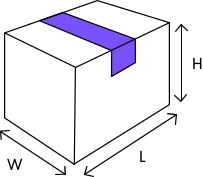
Different courier companies use different metrics, but the most common method is to multiply the 3 parcel dimensions in centimetres and divide by 5,000.
Don’t worry, the handy tool above calculates this for you, but if you want to work it out for yourself, here’s how it’s done:
Length x Width x Height / 5000
Multiply the 3 dimensions
Multiply the length x height x width of your parcel in cm.
For example, 20 x 20 x 30
Divide the answer by 5,000*
You've now calculated the volumetric weight in kg.
*To calculate volumetric weight using inches, simply divide by 305
Compare to the physical weight
If the number is greater than the physical weight, then your shipment will be billed based on the volumetric weight.
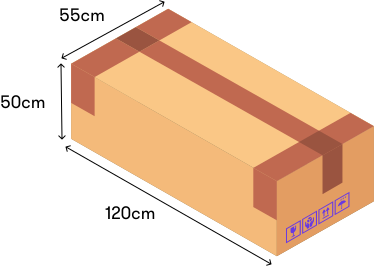
120cm x 55cm x 50cm
5,000
= 66kg (vol.weight)
Calculate volumetric weight for freight delivery
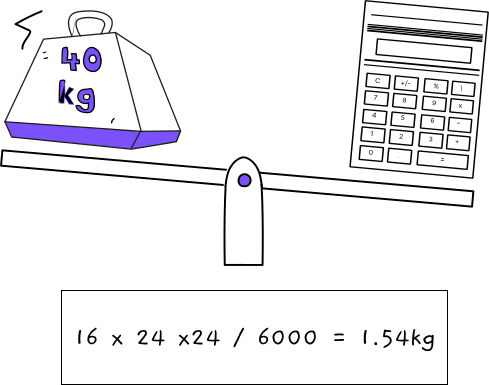
Most road freight, air freight services and airlines use a 6,000 divisor. To calculate the volumetric weight for a freight shipment, multiply the length x width x height in cm and divide by 6,000.
Calculate total chargeable weight of a shipment
Different couriers use different methods for calculating the total chargeable weight of a shipment, and this can affect the chargeable weight and therefore the price of some shipments quite considerably.
:format(avif))
Method 1
The most common way of calculating the chargeable weight of a shipment is by comparing the total physical weight of all the parcels in a shipment to the total volumetric weight of all the parcels and charging whichever is the greater.

This method is used by FedEx and UPS
Total physical weight - 22kg
Total volumetric weight - 24kg
Shipment chargeable weight - 24kg
Method 2
Some couriers, like DHL, charge on a piece basis. So, they calculate the chargeable weight of each parcel individually, then add the chargeable weight of each parcel together.

This method is used by DHL
Parcel 1 chargeable weight - 14kg
+
Parcel 2 chargeable weight - 12kg
Total chargeable weight - 26kg
In this example, you will see that DHL will charge 2kg more for the same shipment, despite using the same volumetric divisor to calculate dimensional weight.
Save on shipping bulky items
You can save on shipping bulky items with some of our postal services as they do not charge volumetric weight. For example, DPD charge a flat rate per parcel, so you do not incur any volumetric fees. Alternatively, use one of our specialist large parcel services from DHL, Parcelforce and FedEx.
Use the right size box
If your shipment contains one or more irregular shaped parcels, the volumetric weight of each parcel will be calculated based on the smallest rectangular shape that the parcels can be accommodated into, so make sure you use the right box.

Sending pallets
If you're sending a pallet, remember the size of the pallet will be accounted for when calculating the volumetric weight of your shipment, so consider using a Euro pallet (1200 x 800mm) rather than a standard UK pallet (1200x1000mm) if your items are small enough.